

The Rise of the BIM Manager in 2025
In the dynamic world of architecture, engineering, and construction (AEC), one role has emerged as indispensable — the BIM manager. Once confined to coordinating models, today’s BIM manager drives digital transformation across the entire project lifecycle.
As BIM evolves through AI integration, digital twins, sustainability mandates, and data-centric workflows, the BIM manager has become the cornerstone of every successful project — ensuring that collaboration, accuracy, and innovation remain in sync.
What Does a BIM Manager Do?
A BIM manager oversees the planning, implementation, and maintenance of BIM processes throughout a project. They ensure that teams use a unified digital environment for design, construction, and operations.
Core Responsibilities
- Strategic Planning: Define and implement BIM Execution Plans (BEP) and ensure alignment with ISO 19650 standards.
- Coordination: Lead multi-discipline collaboration between architects, structural, and MEP teams.
- Data Integrity: Maintain model accuracy, adhere to naming conventions, and ensure metadata compliance.
- Technology Oversight: Choose and integrate BIM software and Common Data Environments (CDE).
- Training and Change Management: Promote BIM literacy across departments.
- Lifecycle Data Management: Ensure data is reusable for operations and maintenance, not just construction.
In short, a BIM manager transforms BIM from a design tool into a strategic enabler for business growth and sustainability.
The Strategic Importance of a BIM Manager
1. Enabling Seamless Collaboration
A BIM manager establishes digital workflows that enable all stakeholders — designers, engineers, contractors, and owners — to work within a single, connected data ecosystem. This eliminates silos and reduces communication errors.
2. Driving Quality and Efficiency
With structured model validation and clash detection, BIM managers prevent design conflicts early. Case studies show firms with strong BIM management reduce rework costs by up to 90% and project timelines by 15–25%.
3. Ensuring Compliance and Standardization
BIM managers are custodians of standards like ISO 19650, ensuring projects follow best practices in documentation, version control, and collaboration.
4. Building Long-Term Digital Value
Modern BIM managers ensure that project data flows seamlessly into digital twins, facilities management, and sustainability tracking, creating long-term value beyond construction.
Key Competencies of a Successful BIM Manager

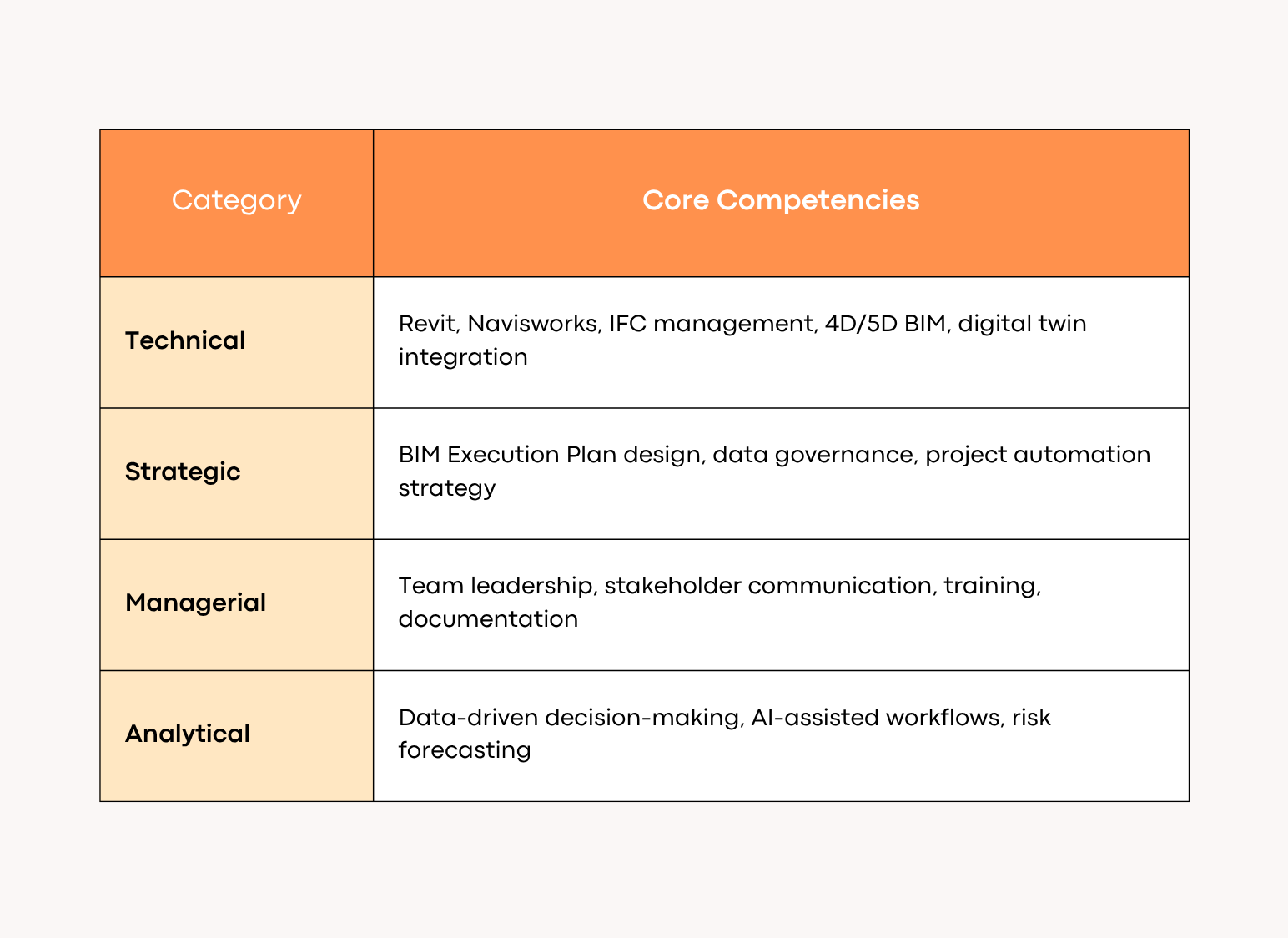
A well-trained BIM manager blends technical mastery with strategic thinking — becoming both a digital architect and a project strategist.
Trends Redefining the BIM Manager Role in 2025
1. AI and Predictive BIM
The 2025 BIM landscape is data-first. AI-driven BIM automates repetitive tasks, generates design options, and predicts clashes before they occur. BIM managers now guide these systems, interpreting insights and optimizing performance.
2. Digital Twins and IoT
BIM models are evolving into real-time digital twins, linked to IoT sensors for predictive maintenance, energy monitoring, and asset management. BIM managers oversee this digital ecosystem.
3. Sustainability and Circular Economy
BIM managers ensure sustainability metrics are embedded in design — from energy performance to embodied carbon and materials reuse. Their work directly supports green building certifications and net-zero goals.
4. Remote Collaboration and Cloud BIM
With global teams and cloud-based platforms, BIM managers enable real-time coordination across time zones, maintaining model fidelity and access control.
Global Insights and Case Examples
- Hinkley Point C (UK) – A lean digital engineering team used SimpleBIM workflows to maintain model quality and cut administrative overhead.
- Optimar Precon (USA) – Early clash detection saved $450,000 in rework costs and reduced project duration by 15%.
- NCC Construction (Nordic Region) – Automated BIM data processing saved 300 staff hours weekly, setting a new efficiency benchmark.
These examples underline that a skilled BIM manager directly drives ROI and innovation across the AEC ecosystem.
Key Competencies of a Successful BIM Manager

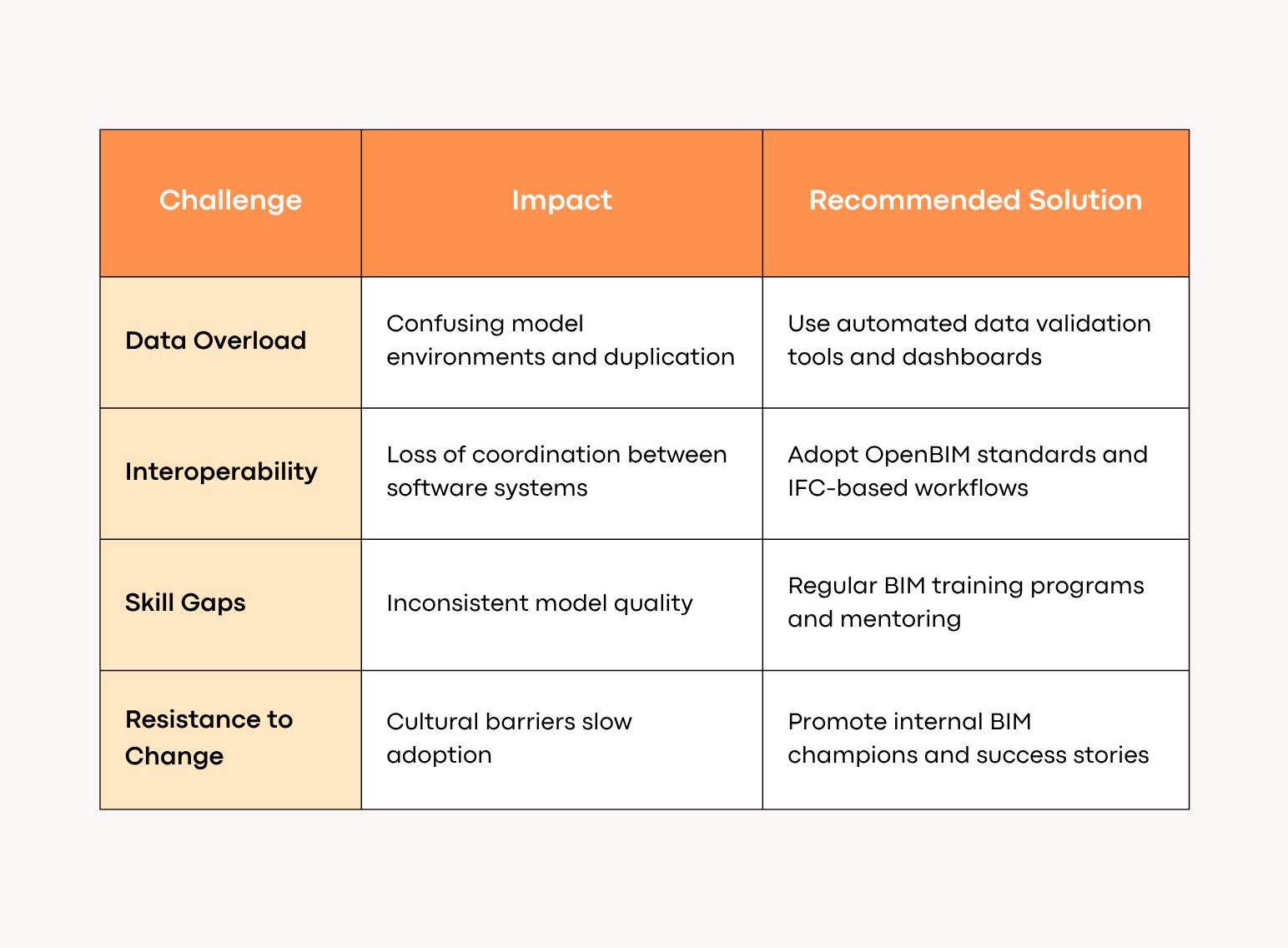
The Future of BIM Managers
By 2030, BIM managers will evolve into Digital Project Integrators, managing not just models, but full data ecosystems — connecting BIM with AI, robotics, and sustainability analytics.
They will move from “model management” to “decision intelligence.” Their leadership will define how organizations leverage digital construction to meet net-zero, cost, and performance goals.
At ReviCAD Solutions, we partner with AEC firms to strengthen their BIM management frameworks. Our services support BIM managers with:
- Implementation strategies aligned with ISO 19650 and global best practices.
- BIM Execution Plan development and cross-discipline coordination.
- Model validation and data analytics dashboards for decision-making.
- Training and upskilling programs to build in-house BIM leadership.
- AI-driven BIM and digital twin integration for long-term lifecycle efficiency.
ReviCAD’s expertise ensures your BIM manager has the right tools, data clarity, and process intelligence to lead your organization into the digital construction era.
Transform your construction projects with smarter, data-driven BIM implementation.
Talk to our BIM specialists today to see how ReviCAD Solutions can help you accelerate project delivery and cut costs with precision modeling.