Abstract
BIM modeling is often associated with better visualization and coordination, but its real impact lies in how it reshapes collaboration between architects and engineers. By creating a shared working environment, BIM reduces misalignment, improves decision-making, and brings clarity to complex design interactions. This article explores how BIM changes the way teams work together and where its true value lies beyond technology.
Collaboration Challenges in Traditional Workflows
If you have worked on enough projects, you begin to notice a pattern. Most coordination challenges are not caused by a lack of expertise. They emerge from gaps in understanding between disciplines. An architect might define a space based on design intent, while an engineer evaluates the same space based on performance and feasibility. Both perspectives are valid, but when they evolve independently, alignment often comes too late.
In traditional workflows, collaboration tends to follow a sequence rather than a conversation. Information moves from one team to another through drawings, markups, and revisions. Even when handled carefully, this process introduces interpretation gaps. By the time conflicts are identified, they are often tied to decisions that are already difficult to change.
From Sequential Workflows to Shared Environments
This is where BIM begins to shift the dynamic. It does not simply improve how designs are created. It changes how teams engage with each other during the design process.
Within environments like Autodesk Revit and cloud platforms such as Autodesk Construction Cloud, architects and engineers interact with a shared model that evolves continuously. Instead of reacting to updates after they occur, teams are able to see changes as they happen and respond in context.
This creates a more simultaneous way of working. Design decisions are no longer passed along in stages. They are shaped collaboratively, with input from multiple disciplines at the right time. The model becomes more than a representation of the project. It becomes a shared reference point for decision-making.
Reducing Assumptions Through Shared Visibility
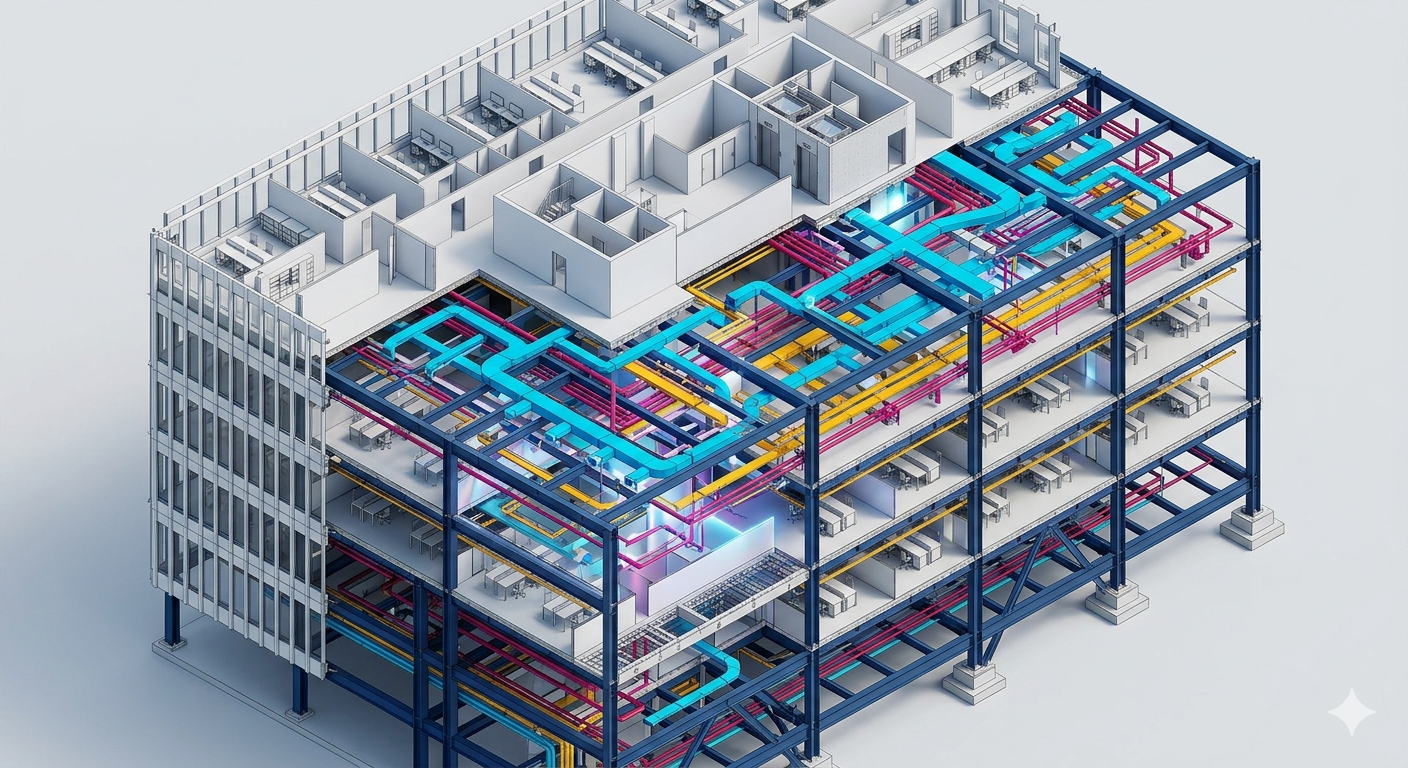
One of the most important outcomes of this shift is the reduction of assumptions. When teams rely on separate interpretations of drawings, even small differences in understanding can lead to larger coordination issues later. With BIM, both architectural intent and engineering logic are visible within the same environment. A change in layout immediately reveals its impact on structure and services. Similarly, engineering adjustments are seen within the context of spatial design.
This shared visibility creates a feedback loop that allows teams to refine decisions earlier. Instead of discovering conflicts during coordination reviews, teams begin addressing them during design development itself.
Aligning Design Intent with Engineering Constraints
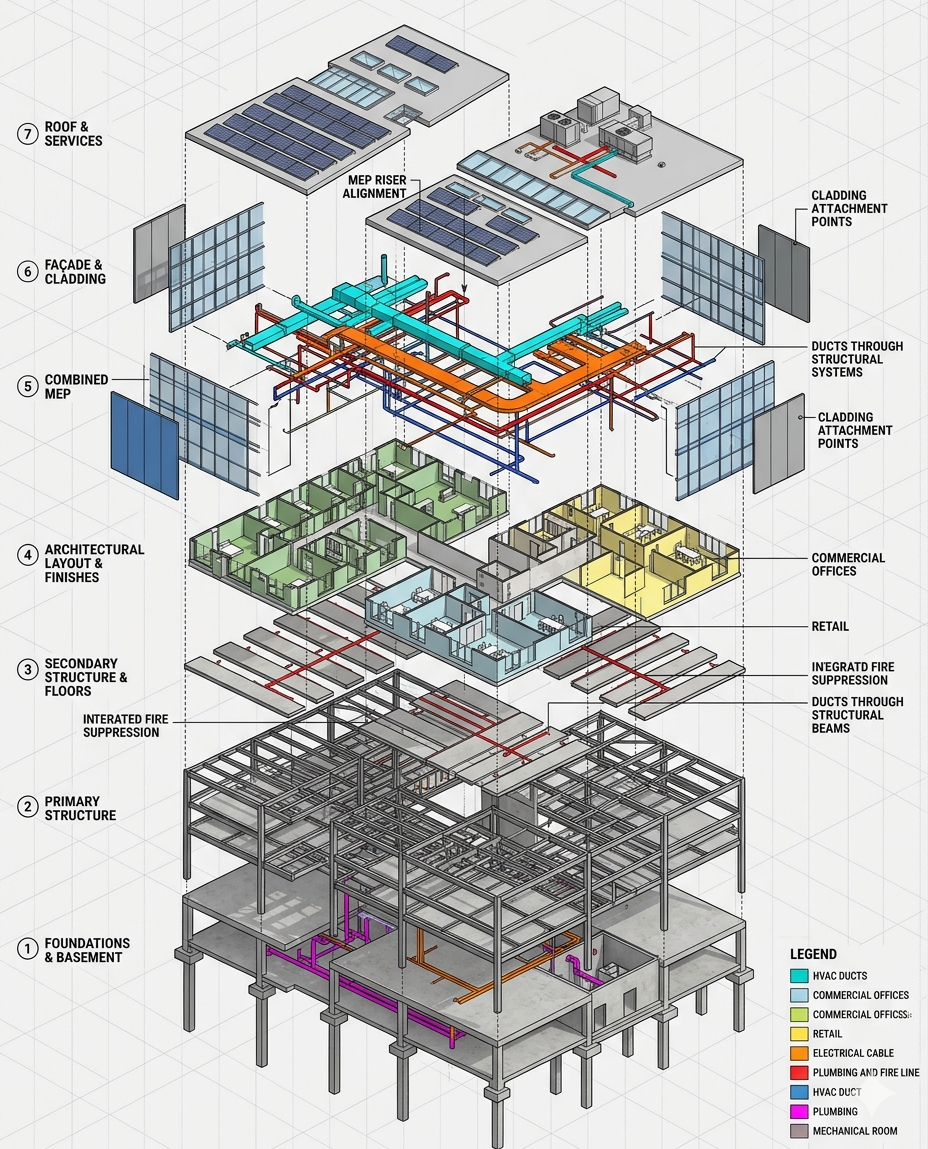
The interaction between architectural intent and engineering constraints is where BIM delivers some of its most visible value. Architects are often focused on spatial quality and user experience, while engineers are responsible for performance, safety, and feasibility. These priorities naturally intersect in areas such as ceiling coordination, service zones, and structural layouts.
Without early collaboration, these intersections often result in compromises that affect both design and constructability. With BIM, these discussions happen earlier and with greater clarity. Teams can test options, evaluate trade-offs, and align on solutions before constraints become fixed. This leads to decisions that are more balanced and better suited to the overall project.
Coordination as an Ongoing Conversation
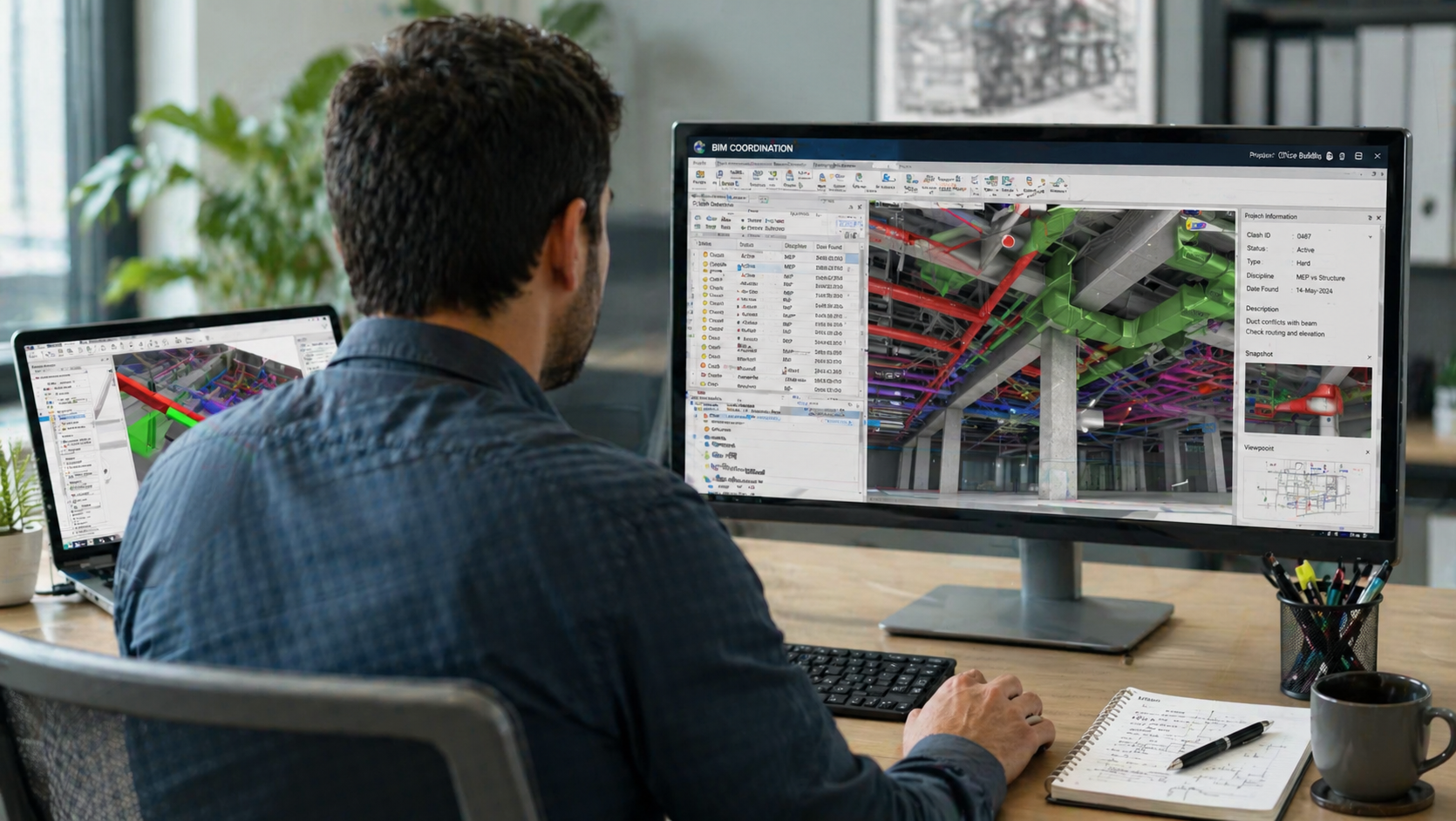
Another important shift is how coordination itself is approached. In many projects, coordination is treated as a corrective step where issues are identified and resolved after design development. BIM allows coordination to become part of the design process itself. When teams work within a shared model, discussions happen continuously rather than at isolated milestones. Issues are addressed as they emerge, often before they escalate into larger problems.
This changes the tone of collaboration. Instead of focusing on identifying mistakes, teams focus on improving solutions together. The result is a more constructive and less reactive workflow.
Enabling Collaboration at Scale
As projects increase in scale, maintaining alignment becomes more complex. Multiple teams, distributed locations, and tight timelines introduce additional challenges to coordination. BIM, supported by cloud-based platforms, allows teams to stay connected to a common source of truth regardless of where they are working from. Updates are visible, decisions are traceable, and communication becomes more structured.
In markets such as the UK and Australia, frameworks like ISO 19650 have further formalized how information is shared and managed. BIM supports these processes by providing the infrastructure needed to maintain consistency across teams.
Where Collaboration Still Breaks Down
Despite the widespread use of BIM, many teams do not fully realize its collaborative potential. In some cases, BIM is still treated as a modeling requirement rather than a process for alignment. Models are created and exchanged, but not fully integrated into how teams work together.
There is also a tendency to rely on tools without addressing workflows. Platforms like Autodesk Navisworks support coordination, but they do not replace the need for structured collaboration. Cloud environments introduce another layer of complexity. Without clear ownership, version control, and communication protocols, shared platforms can create confusion rather than clarity.
Ultimately, BIM highlights existing gaps. It does not resolve them automatically.
The Real Impact Beyond Coordination Metrics
When collaboration improves, the benefits extend beyond measurable metrics such as reduced errors or fewer RFIs. While these are important outcomes, the more meaningful impact is the confidence it brings to project teams.
Aligned teams make decisions earlier and with greater clarity. They spend less time resolving conflicts and more time refining solutions. Projects move forward with fewer disruptions, and the overall delivery becomes more predictable. This shift is often what differentiates well-coordinated projects from those that struggle despite having capable teams.
Ultimately, BIM highlights existing gaps. It does not resolve them automatically.
FAQ
What is BIM collaboration?
BIM collaboration refers to architects, engineers, and other stakeholders working within a shared digital model environment to coordinate design decisions in real time.
How does BIM improve collaboration between architects and engineers?
BIM enables shared visibility of design changes, reduces miscommunication, and allows teams to make coordinated decisions earlier in the project lifecycle.
What tools are used for BIM collaboration?
Common tools include Autodesk Revit, Autodesk Navisworks, and Autodesk Construction Cloud, which support modeling, coordination, and cloud-based collaboration.
Is BIM collaboration only useful for large projects?
No, even mid-sized projects benefit from BIM collaboration by improving coordination, reducing errors, and streamlining communication between teams.
How We Approach This at ReviCAD
At ReviCAD, our focus is not limited to developing BIM models. We work to create an environment where collaboration between architects and engineers can happen effectively.
This involves structuring workflows, managing federated models, and ensuring that coordination is continuous rather than event-driven. We often act as a connecting layer between disciplines, helping teams align their efforts without friction. In many projects, the real challenge is not technical capability. It is creating consistency in how teams work together.
Ultimately, BIM highlights existing gaps. It does not resolve them automatically.
Final Takeaway
BIM modeling changes more than just how projects are designed. It changes how teams interact and how decisions are made. When architects and engineers move from working in sequence to working together within a shared environment, projects benefit from better alignment and fewer uncertainties.
The technology is already in place. The advantage lies in how effectively it is used to bring people together.
If you are looking to improve collaboration between architects and engineers on your projects, let’s explore how a more structured BIM approach can help your teams work together more effectively from the start.